
Glass Laser Cutting, Splitting & Drilling
Laser‑Empowered Glass Processing: Cutting, Splitting and Drilling
CKD offers complete equipment solutions for laser glass cutting, splitting and drilling. It processes a wide range of glass substrates including soda‑lime glass, borosilicate glass, aluminosilicate glass, quartz glass and optical glass, delivering processing solutions for specialty industries such as consumer electronics, medical‑biotech, home appliances, jewelry and artworks.

Add Value to Your Business with Laser Glass Cutting, Splitting & Drilling Equipment
Whether you run a large‑scale production line or a small‑scale processing workshop, laser processing delivers superior processing flexibility for glass manufacturers pursuing high precision and automated production, compared with traditional mechanical machining.
As a non‑contact processing technology, laser precisely controls cutting trajectories and splitting paths, enabling easy fabrication of small‑size parts and complex hole geometries.
Traditional glass machining suffers from common pain points: high chipping‑related material loss, limited capability for complex‑shaped products, low efficiency of outsourced processing, long sampling cycles, and cumbersome post‑processing procedures. Laser glass cutting and drilling equipment effectively addresses these challenges while bringing additional business benefits.
Core Pain Points Solved
Reduce Yield Loss: Eliminate edge chipping and micro-cracks to minimize material waste.
Overcome Bottlenecks: Precision machining for micro-holes, complex shapes, and specialty glass.
Eliminate Outsourcing: Bring production in-house to shorten lead times and prevent transit damage.
Boost Quality & Output: Drive higher throughput with consistent industrial-grade quality.
Fast-Track Prototyping: Deliver fast prototyping with strict tolerance and minimal post-processing.
Additional Business Advantages
Expand OEM Business: Monetize idle capacity by taking on flexible subcontracted parts processing.
Unlock Asset Value: Support short/long-term equipment leasing to turn idle assets into predictable cash flow.
Agile & Flexible Production: Tooling-free operation, perfectly suited for high-mix, low-volume orders.
Lower Labor Costs: Reduce reliance on highly skilled operators with standardized workflows that support global client expansion.
Mitigate Business Risk: Diversify business models to effectively buffer against seasonal industry fluctuations.
CKD Laser Equipment Cutting & Drilling Sample Display

Material: Aluminosilicate Glass
Thickness: 0.55 mm
Material: Quartz Glass
Hole Diameter: Ø0.1 mm
Material: Borosilicate Glass
Hole Diameter: Ø3 mm
Material: Optical Glass
Precision / Tolerance: ±0.02 mm
Material: Borosilicate Glass
Thickness: 2 mm
Material: Soda-Lime Glass
Thickness: 6 mm
我们的激光设备核心能力
在最近的一个项目中,我们的团队将普通的卫生间标识牌改造成了精致醒目的设计。我们利用专为激光应用而设计的Rowmark塑料,以及配备150瓦激光管(功率设置为20%,速度设置为300毫米/秒)的Boss HP2440激光切割机,将我们的创意变为现实。从简洁流畅的设计到醒目亮丽的标语,我们的卫生间标识牌充分展现了创意与尖端激光技术相结合的无限可能。
展示下我们机器的生产能力,产量,质量等

图片或视频







Metal Processing Systems
Recommended Glass Laser Machines
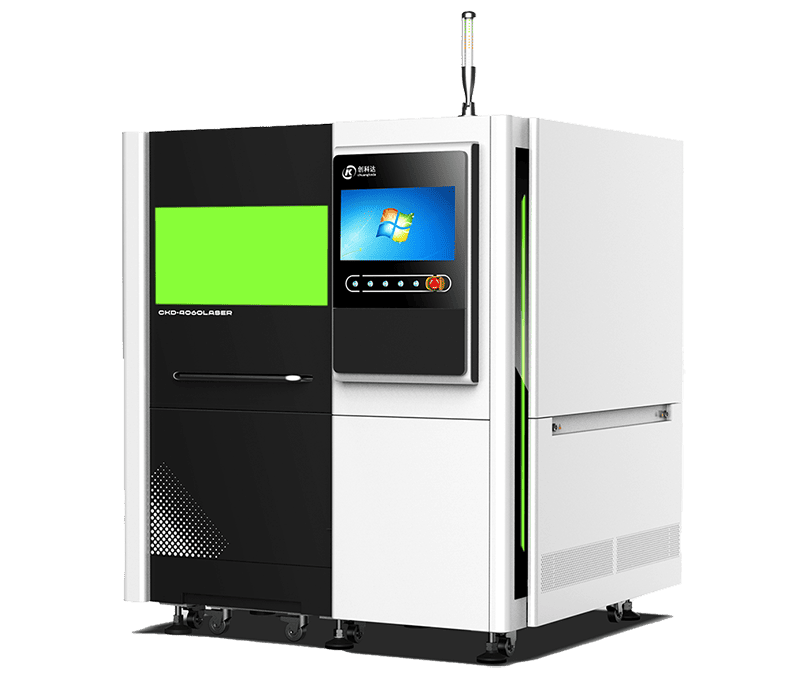
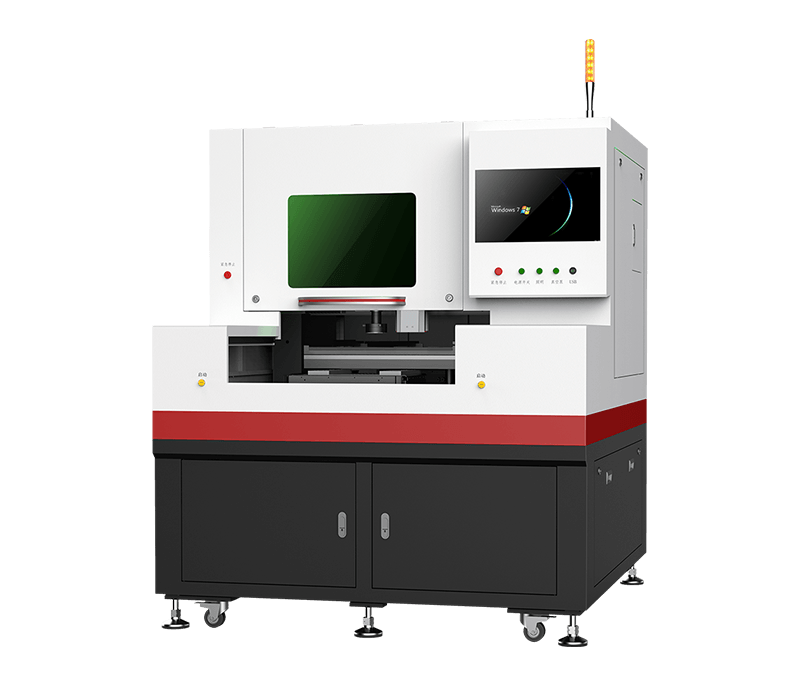
Get Your Custom Laser Processing Proposal
Provide us with your glass samples, CAD drawings and production requirements, and our engineers will recommend suitable laser solutions, processing methods, automation configurations and production plans for you.
Typical Applications of Common Glass for Laser Cutting & Drilling
Physical‑chemical properties vary greatly among glass types, requiring tailored processing parameters. Our machines support cutting, splitting and drilling for all above glass materials. Process sample evaluation is available.
| Glass Type | Core Properties | Laser Processing Capabilities | Typical Industry Applications |
|---|---|---|---|
Soda‑lime Glass | Universal standard glass, low cost, average toughness, moderate thermal sensitivity | Cutting, scribing & breaking, drilling. Heat control required due to risk of chipping. Ideal for medium‑to‑large cut‑outs and contours | Architectural glass, home appliance panels, daily‑use glass, ordinary display cover glass |
| Borosilicate Glass | Low thermal expansion, high temperature & thermal‑shock resistance, excellent chemical stability | Well‑suited for laser cold processing with minimal chipping. Enables precision contours and micro‑holes | Laboratory ware, medical glass, industrial viewing windows, energy‑storage battery lids, high‑temperature instrument glass |
| Aluminosilicate Glass | High strength & scratch resistance; performance improves greatly after chemical strengthening (mainstream cover‑glass material) | High‑speed contour cutting, array micro‑drilling. Thermal stress management needed to prevent cracks in the strengthened layer | Mobile phone covers, touch panels, display protective glass, automotive smart glass, wearable device lenses |
| Fused Silica Glass | Ultra‑low thermal expansion, UV‑transparent, heat‑resistant, brittle and premium‑priced | High‑precision micro‑machining for tiny holes and complex profiles; demands high‑quality laser beams | Semiconductors, photovoltaics, optical components, UV instruments, sensor windows |
| Optical Glass | Precisely controlled refractive index and dispersion; some grades are highly heat‑sensitive | Precision profiling, micro‑vias and grooving. Strict heat‑input control to preserve original optical performance | Lenses, prisms, optical communication parts, high‑precision optical modules |
Meet Our Team
Laser Glass Cutting, Splitting & Drilling Defects FAQ
Causes: Improper laser pulse energy, misaligned focal point, mismatched gas‑assist parameters and insufficient workpiece support, while high‑power direct breakthrough at hole exit further worsens chipping defects.
Solutions:
- Adopt multi‑pass layered processing and reduce single‑pulse energy to mitigate thermal shock.
- Precisely calibrate the focus; place the focus at the mid‑point of the plate for thick‑glass processing.
- Adjust the pressure and angle of assist gas to guarantee effective slag removal.
- Use a vacuum adsorption platform to keep the workpiece fully flat and avoid local suspension.
- Lower laser power at the hole‑exit section for gentle penetration and reduce exit chipping.
Causes: Severe thermal‑stress fluctuation, excessive material removal per pass leading to heavy heat accumulation, inherent substrate defects and rapid forced cooling collectively trigger micro‑crack formation.
Solutions:
- Prioritize picosecond / femtosecond ultra‑fast laser equipment to minimize thermal effects.
- Apply multi‑pass low‑heat scanning; reduce scanning speed at corners to release stress.
- Screen incoming materials and reject glass substrates with scratches or hidden internal cracks.
- Allow parts to cool naturally after processing; avoid strong‑air forced cooling.
Causes: Focus offset brings beam divergence; molten slag continuously erodes hole walls, and direct one‑shot piercing without wall trimming finally creates tapered bell‑mouth holes.
Solutions:
- Enable dynamic focus tracking for thick‑glass drilling.
- Complete pre‑piercing first, then trim hole walls by circular scanning.
- Optimize assist gas to timely blow away molten slag inside holes.
- Add extra wall‑trimming passes for extra‑thick glass substrates.
Causes: Excessive heat input prevents timely discharge of molten glass which re‑adheres to hole walls; over‑high pulse energy and poor deep‑hole slag removal aggravate such defects.
Solutions:
- Deploy ultra‑fast laser cold processing to reduce molten by‑products at source.
- Use layered processing to control material removal per layer.
- Increase assist‑gas flow for deep holes to improve internal slag clearance.
- Gentle post‑polishing can be adopted if application conditions permit.
Causes: Excessive laser energy creates a large heat‑affected zone; high‑temperature oxidation happens under ambient air, and spattered slag sticks to surfaces and leaves burn marks.
Solutions:
- Reduce energy per scan pass and increase scanning passes to lower heat accumulation.
- Adopt high‑purity nitrogen as shielding gas to block oxidation reactions.
- Adjust nozzle angle to prevent slag spatter from contaminating glass surfaces.
Causes: Uncompensated galvanometer distortion, minor glass deformation induced by thermal stress and workpiece shift caused by insufficient vacuum holding result in dimensional out‑of‑tolerance. Solutions:
- Perform regular galvanometer calibration and distortion compensation.
- Strengthen vacuum holding to keep workpieces firmly fixed and flat.
- Reserve proper thermal‑deformation compensation margin for thick‑glass processing.
- Carry out dimension inspection only after workpieces cool down completely.
Causes: Insufficient processing passes and pulses, accumulated slag inside deep holes, plus focus attenuation with increasing glass thickness are the main triggers for blockage and incomplete piercing. Solutions:
- Set appropriate over‑penetration margin to achieve full penetration.
- Turn on dynamic focus tracking for thick‑glass drilling.
- Optimize gas‑assist parameters to enhance slag flushing inside holes.
Causes: Pre‑existing scratches or hidden flaws on raw glass sheets, uneven internal stress and hard clamping pressure will trigger off‑path random fractures under processing thermal stress. Solutions:
- Strictly inspect incoming sheets and reject plates with edge damage or surface scratches.
- Fix workpieces by full‑area vacuum flat adsorption and avoid hard mechanical clamping onto glass.
- Use multi‑pass low‑heat‑input processing; ultra‑fast laser solutions are preferred.
Product Classification
Why Choose Us
High‑Tech Qualification & Reputation
As a state‑certified high‑tech enterprise with full R&D qualifications and tech‑policy support. We serve numerous glass processors and have earned solid market reputation with verified enterprise strength.
Continuous Equipment Iteration
We keep upgrading hardware and process algorithms for glass cutting, splitting and precision drilling. Our equipment evolves to match new glass materials and modern production requirements.
Cross‑industry Experience & Export Certifications
Our machines serve optical glass, home‑appliance glass, architectural glass, display cover glass and special‑process glass. Equipped with full export certifications to support worldwide delivery and overseas production deployment.
Values & Full‑lifecycle Service
Guided by practical R&D philosophy and long‑term win‑win mindset, we avoid one‑off hardware sales. Full services include pre‑sales sample validation, installation, training and after‑sales maintenance to empower customers for sustainable growth.