



Automotive Glass Laser Cutting & Drilling

Elevating Automotive Glass Production via Laser Processing

The CKD laser glass processing system delivers high-precision cutting, micro-drilling, micron-level 2D/3D micromachining, and selective coating removal. Fully compatible with standard automotive glass and optimized for smart vehicles equipped with ADAS, it efficiently meets glass processing demands across a wide range of vehicle models:

  • Sedans & SUVs

  • MPVs & Pickups

  • New Energy Vehicles (NEVs)

  • Commercial Fleets

CKD Laser Systems for Precision Automotive Glass Manufacturing

Automotive Glass Laser Cutting

For windshields, panoramic roofs and irregular side windows. Support 2D / 3D contour cutting, edge finishing and selective coating removal for chip‑free, low‑stress processing.

Automotive Glass Laser Drilling

Micro‑holes for cameras, rain sensors and radar components. Fabricate inclined, normal‑direction and mounting holes to meet automotive‑grade precision standards.

Laminated & Curved Glass Machining

Picosecond ultrafast laser cold processing for laminated glass and 3D curved windshields / sunroofs. Prevent PVB bubbling & delamination with minimal post‑grinding required.

ADAS & AR‑HUD Glass Solutions

4‑5‑axis linkage plus 3D vision scanning for precision cutting & drilling on AR‑HUD covers and radar‑integrated smart glass. Available for OEM / ODM sampling and mass production.

Automotive Glass Cutting & Drilling Samples by CKD Laser Equipment

Tailored for automotive industry requirements. Perform precise cutting and micro‑hole drilling on various automotive glass types. Consistent crack‑free edge quality supports OEM validation and mass‑production demands.

The Shift to Laser Processing in Automotive Glass

Modern automotive glass features complex shapes, lightweight construction and integrated functionalities. Conventional mechanical processing suffers from chipping, micro‑cracks and poor repeatability for complex contours and sensor micro‑holes. According to the GlassOnWeb / GPD 2025 conference report, non‑contact laser processing is widely adopted by automotive glass manufacturers. It delivers crack‑free clean edges, eliminates post‑grinding and tool wear, and yields higher production rates for ADAS‑equipped smart vehicle glass. Beyond processing quality, enterprises must also meet automotive‑supply‑chain requirements for batch consistency, production cycle time and traceability.

以更低能耗制造,面向长期服役的汽车玻璃激光设备

在最近的一个项目中,我们的团队将普通的卫生间标识牌改造成了精致醒目的设计。我们利用专为激光应用而设计的Rowmark塑料,以及配备150瓦激光管(功率设置为20%,速度设置为300毫米/秒)的Boss HP2440激光切割机,将我们的创意变为现实。从简洁流畅的设计到醒目亮丽的标语,我们的卫生间标识牌充分展现了创意与尖端激光技术相结合的无限可能。

图片或视频

Scaling Automotive-Grade Glass Production with CKD Laser

Utilizing non-contact cold processing, our ultrafast laser systems perfectly balance processing quality, cycle-time stability, and strict assembly consistency

Crack-Free Quality

Picosecond laser minimizes mechanical stress and thermal impact. Clean contour cutting eliminates chipping & micro‑crack risks for windshields, panoramic roofs and irregular automotive glass.

Lamination-Friendly

Optimized energy control and laser path prevent PVB delamination and bubbling during laminated glass processing. Stable micro‑drilling performance for AR‑HUD optical glass.

Complex Curved Glass Processing

4‑5‑axis motion system paired with 3D visual tracking follows free‑form surfaces dynamically. Support bevel holes, normal‑direction holes to meet ADAS sensor integration requirements.

Production Stability

Skip heavy post‑polishing work to reduce consumables, waste and manual labour. Verified production workflow with full data traceability, from prototype sampling to automotive‑grade volume manufacturing for OEM & ODM projects.
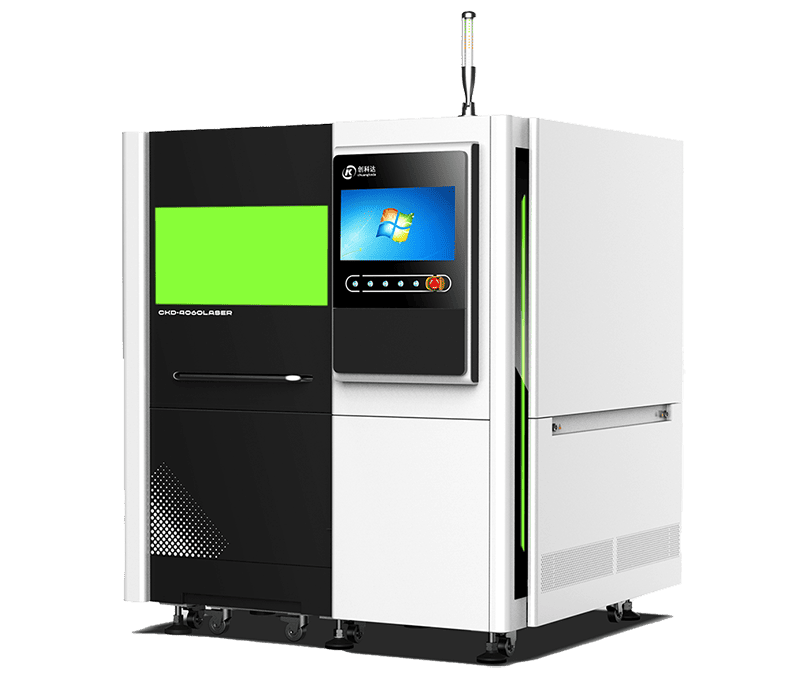
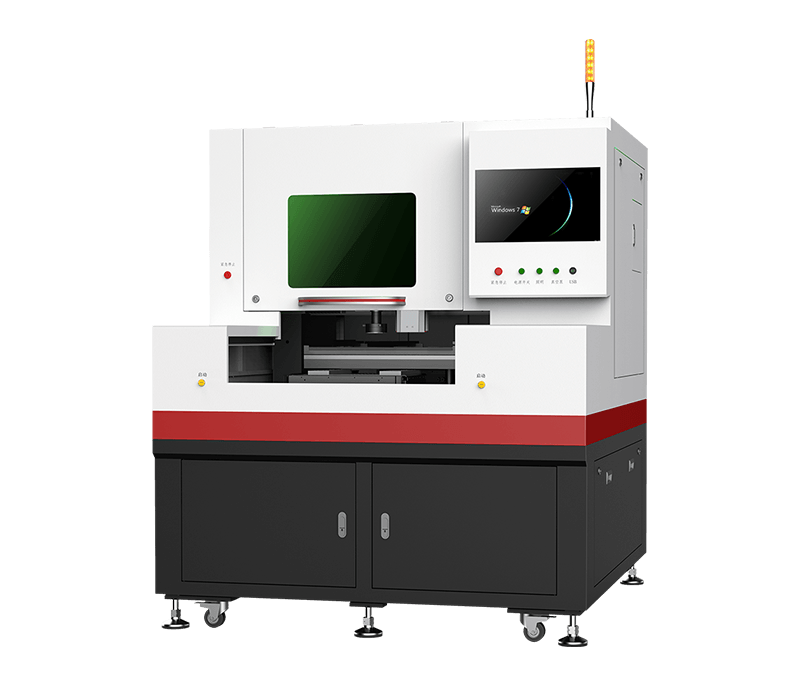
Recommended Laser Machines

Infrared Glass Laser Cutting Machine
Metal Laser Machines
Semiconductor Laser Cleaning
Display Panel Laser Machines

Get Your Custom Laser Processing Proposal

Provide us with your automotive glass samples, CAD drawings and production requirements, and our engineers will recommend suitable laser solutions, processing methods, automation configurations and production plans for you.

FAQ for Automotive Glass Laser Processing

No, not with a properly optimized ultrafast laser process. Picosecond laser processing uses highly controlled energy to modify the glass with limited heat transfer to the surrounding area, helping protect the PVB interlayer from melting, bubbling, and delamination. The drilling path and laser parameters need to be optimized according to the glass structure.

It can, if the process is not properly controlled. Compared with mechanical drilling, ultrafast laser processing is non-contact and produces much less mechanical stress. With optimized parameters and appropriate inspection, microcracks and residual stress can be effectively controlled, helping reduce the risk of cracking during vehicle assembly and operation.

Yes. For curved automotive glass, a 4- or 5-axis system combined with 3D vision can follow the glass surface and compensate for its changing angle. This allows contour cutting, normal-direction drilling, and angled holes on curved surfaces.

Yes. With a properly configured laser system and optimized process parameters, high dimensional accuracy and consistent hole geometry can be achieved. For example, automotive glass applications with optimized laser parameters and a suitable machine configuration, cutting accuracy can reach around ±0.02 mm, while hole diameter tolerance can reach around ±0.03 mm. Actual accuracy depends on the glass type, thickness, geometry, and processing requirements.

Mechanical drill bits easily cause edge chipping and micro‑cracks; interlayer damage frequently occurs on thick laminated glass. Water‑jet cutting may squeeze laminates and shift interlayer material, degrading HUD optical performance. CKD picosecond laser provides non‑contact cold processing with well‑defined hole geometry in one‑step process, delivering superior optical consistency for mass‑production of smart automotive glass.

Usually, no extensive grinding or polishing is required. A well-controlled laser process can produce relatively clean edges and holes, so only light edge treatment may be needed depending on the application. This can also reduce the risk of introducing additional stress through secondary mechanical processing.

Micro-holes down to around 0.1 mm can be achievable in suitable applications. For automotive glass applications, minimum hole size can reach 0.1 mm. Actual achievable aperture depends on glass thickness and material. Sample testing is recommended for process validation.

Not necessarily. With the right laser source and process parameters, coating damage can be minimized. However, AF, AR, and other optical coatings require dedicated process development because the coating may respond differently to laser energy than the glass substrate.

No. Most automotive glass can be evaluated for laser processing, but fully assembled or encapsulated glass is generally not suitable for secondary cutting or drilling. Very thick or specially coated glass may also require additional testing before selecting the laser process.

Yes. The process can be evaluated using your actual glass, drawings, hole sizes, cutting profiles, and production requirements. This helps determine the suitable laser source, machine configuration, processing parameters, and expected results before moving to mass production.

Why Automotive Glass Manufacturers Choose Our Laser Machines

Many lasers only do lab samples. We supply complete machines with proven processes for your in‑house production.

Precision & Accuracy

Calibrated for automotive‑grade standards, our machines deliver ultra‑fine results beyond generic lasers and mechanical tools. Stably reproduce complex profiles & ADAS micro‑holes in your mass production, ensuring consistent dimensions and lower reject rates.

Versatility

Built‑in automotive‑glass process library supports tempered, laminated, 3D curved and coated optical glass. Capable of cutting, micro‑drilling & coating removal for ADAS covers, sunroofs and streaming‑mirror glass. One‑machine multi‑part production. Sample testing for validation only; no contract processing.

Proven Industry Experience

Proven track‑record deploying machines for glass manufacturers & Tier‑1 suppliers. Deep knowledge of auto‑production pain‑points: yield, cycle‑time and fast change‑over. Sample testing & parameter tuning help you avoid costly trial‑and‑error.

Superior Output Quality

Glass‑optimized laser process delivers chip‑free clean edges to cut post‑processing work. Controlled heat input reduces hidden micro‑cracks. Meets automotive safety standards and lowers breakage & assembly failure risks.